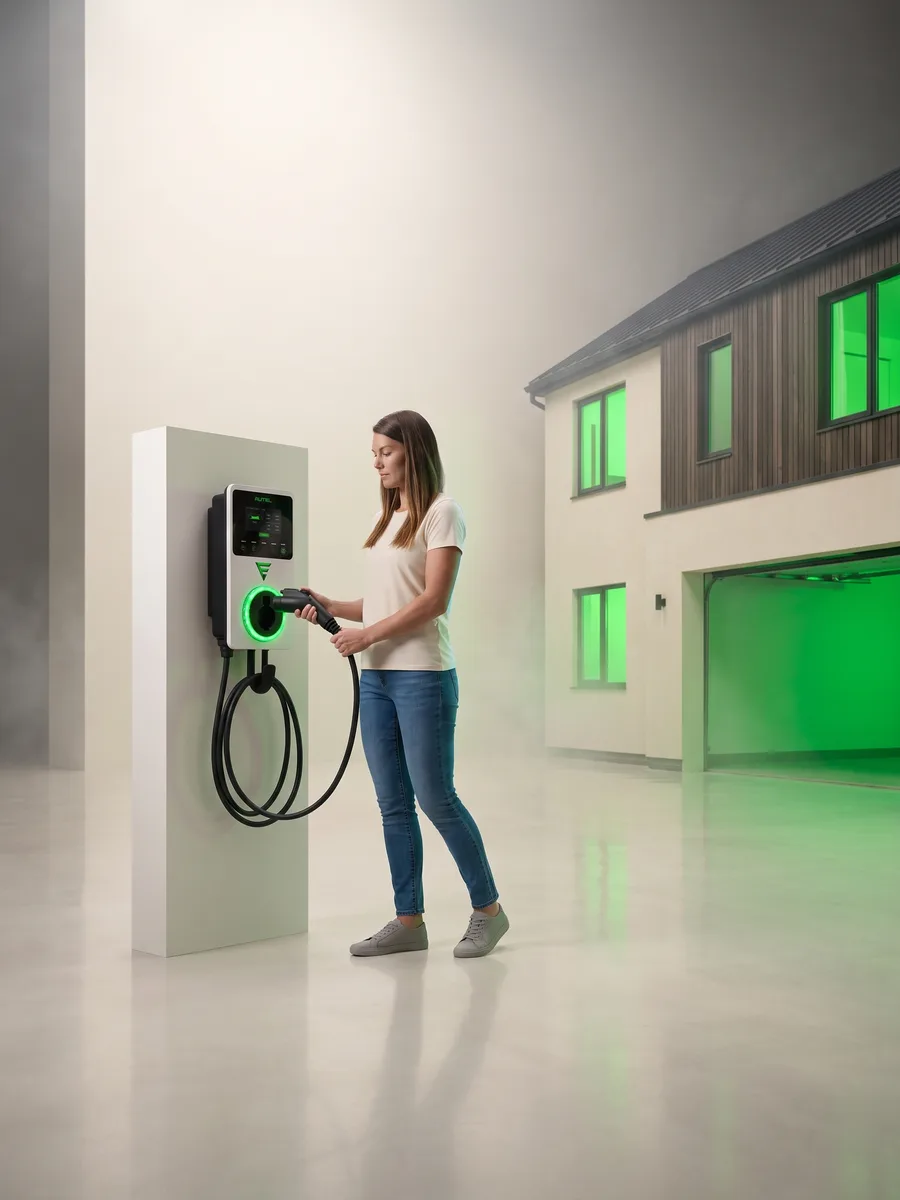
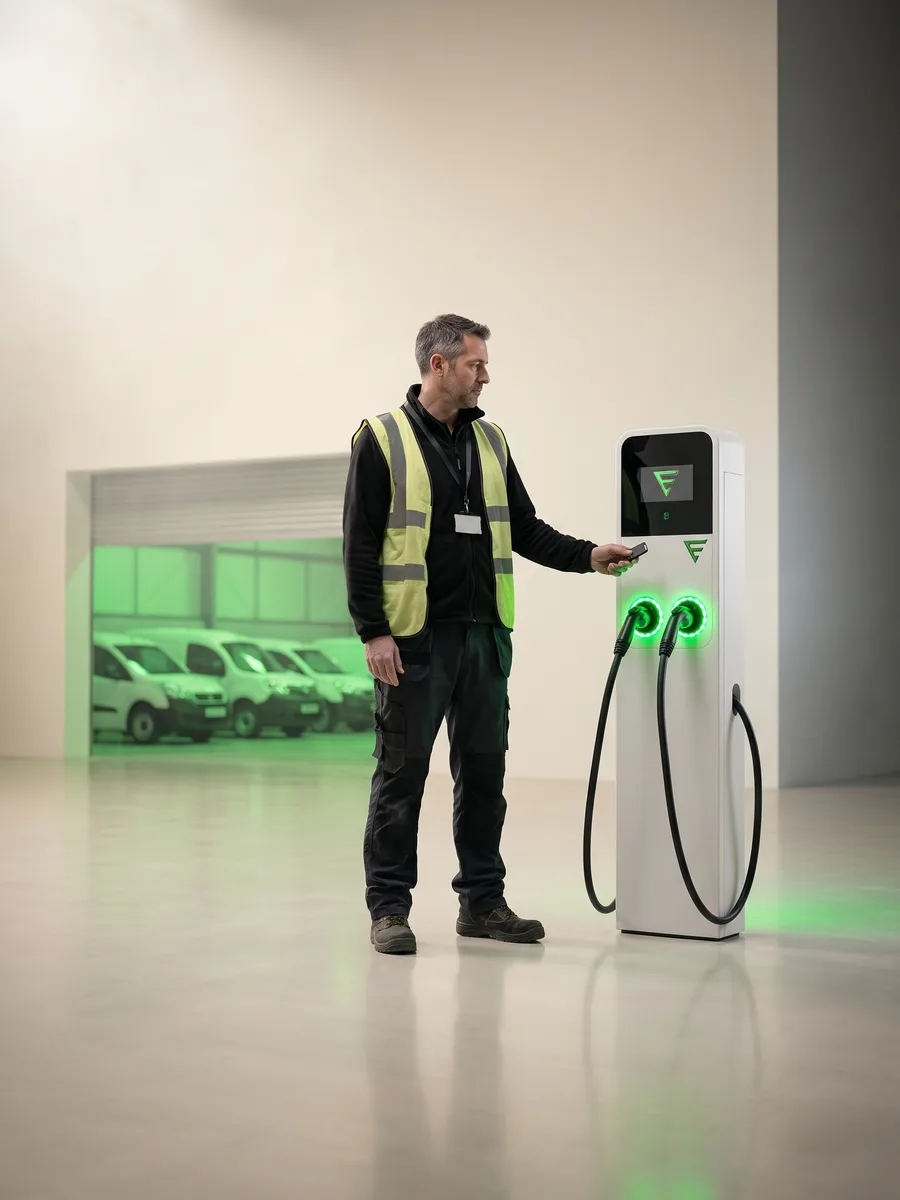
Choose your player
Pick the one that is you. The page follows.
EV Initiative operates EV chargers for the people who own them. Plug in any OCPP charger. We handle drivers, payments, payouts and alerts. You keep 85%.
Passive income
A charger is a parking space that earns. Who gets paid what depends on who owns the hardware and who owns the ground it sits on. Three answers, and one that did not exist before.
Your charger, your property. No subscription, no per-charger fee, no listing fee. Ever.
Hotels, retail, workplaces, multifamily. You bought the hardware. We operate the network.
Two income streams. One ends at the invoice. The other starts there.
Most fleets are not running a charging program. They are running an expense program that happens to involve electricity.
The one that did not exist
A parking upgrade bought before construction is an asset that sits dark while its owner is at work, and a neighbour queues for the one shared unit forty feet away. That was never a hardware shortage. There has simply never been a way for the person who owns the plug to let someone use it and be paid for it.
Now there is. Open your charger at your price, during your hours, with a free list for the people you like. You never pay to use it yourself. The building gains capacity it did not fund and stops fielding complaints about the shared plug.
Your share transfers to your own bank through Stripe. No invoicing, no chasing, no reconciling, no monthly request.
Type a rate and the screen shows what you keep per kWh after your electricity estimate, live, before you save. That is the number that decides whether hosting is worth it.
Every incentive, grant and tax credit stays with you. Not routed through us, not shared. It is in the contract rather than a policy that can change.
A charger goes quiet and we know inside a minute. Most fixes are a remote reset from a desk. A stranded session settles itself and bills the last reading it received.
Special programs
A charger earns from the session. In some places it earns a second time from the carbon that session displaces. Both run on the same metered data, so neither needs anything from you.
The terms that decide what you keep, written down rather than assumed. You set the price and the hours. Your own charging is free. Every rebate, grant and tax credit stays with you. Leave whenever you like and take your hardware and your data with you.
Read the program → Canadian Carbon Credit ProgramElectricity delivered to a car is a transportation fuel under Canada's Clean Fuel Regulations, and it earns credits. Only a registered charging network operator can claim them. We are that operator, so a connected Canadian charger earns on every kilowatt it moves. Free sessions count, because credits come from energy moved rather than money collected.
How it works in Canada →Eligibility depends on where the charger is and what kind of site it sits on. The platform checks both and switches on what you qualify for. See both programs.
Your price
Per charger, per month. $80 a year.
Keep 85% of net. No term. Rebates stay yours.
Buildings →No subscription. No fee. Ever.
Keep 85% of every kWh a guest buys. Your charging stays free.
Home →Points of our 15-point platform share, on every paid session at a pay-to-use charger you sell and deploy, for as long as it runs.
Free to join. Hardware at MSRP. Your margin is yours.
Installers →Base, plus per charger, monthly.
Drivers never see a bill. No per-session fee.
Fleets →Every annual is ten months. Load management, $4 per managed charger, when your service needs it.
Hardware
Autel, at MSRP, programmed to the network before it ships. Drop-shipped to your site. Installers pay the same and keep their margin.
Home wallbox and pedestal sets on the shop. Prices in USD, shipping and tax at checkout.
Operations
Three jobs somebody has to do every day. On most networks that somebody works for you.
Live status per connector, revenue by site and period, and the reason when something is wrong. Most fixes are a reset from this screen.
A charger goes quiet, we know inside a minute. You hear before a driver does.
Money lands in your bank. Split done. Record attached. Nobody invoices anyone.
Most problems are a reset. From a desk, in two minutes. Not a site visit in half a day.
Running since 2018
Thousands of sessions on one platform, from a single home plug to a hotel group, across North America and abroad. Owners name a price. Drivers pay in eleven languages. The money lands in the owner's account.
Twenty-two chargers in one garage. Twenty-one of them private plugs, bought as parking upgrades, now on the same network as the visitor unit. A resident who owns a plug names a price, a neighbour charges, and the owner is paid.
Nobody in the building runs it. Pricing, payment and payout happen on the platform, and every owner sees their own numbers.
Twelve chargers across four properties, one owner, all of them in use. Live status, pricing and revenue for every site on one login, with one payout.
The front desk never learns what OCPP is. Guests plug in and pay. The owner opens the console for the numbers, not because something needs them.
Experience-Driven Charging by EV Initiative, in collaboration with Tesla. eviinfra.com
EVII™
Eleven languages. Nothing changes without your yes.
Yes. Any OCPP charger, which is most units sold in the last five years.
Automatically, to your bank, through Stripe. You keep 85%. No invoices.
We know first, we tell you, and most fixes are a remote reset.
If you own the charger and the property, 85% of what a guest pays, gross, and it costs nothing to run. If you own a building, 85% of net and $8 per charger per month. Your own charging is always free.
You set a price and hours once. After that the money transfers to your bank through Stripe with no invoicing, we watch the hardware, and most faults are a remote reset. The one screen worth looking at shows what you keep per kWh after electricity.
Yes, and that model did not exist before. The resident opens their own charger at their price and hours, keeps 85%, and never pays to use it themselves. The building gains capacity it did not fund.
No. You buy hardware at MSRP, sell it at your price, install it, and earn on every paid session those chargers run when they are pay-to-use and not at a home.
Not with load management. It shares the current across the chargers instead of letting them all draw at once.
There is none. Stop paying, keep your hardware, take your data.
You do. It is in the contract. We capture the metered data those programs ask for.
Yes, where your agreement includes it. We pay for every kWh the chargers use, at the per-kWh rate recorded for your site when each session starts. We pay every quarter unless your dashboard shows another schedule. The full rules are our Site Host Terms.
From your utility bill. Count the charges billed per kWh: energy, delivery, generation, PCIA, and per-kWh surcharges and taxes. Demand charges and fixed meter or service charges are not included, because the building pays those whether the chargers run or not. Your Building Admin records the rate in the dashboard, and we reimburse up to 40 cents per kWh on a single rate. A rate change applies to sessions that start after it is recorded.
Your Building Admin connects the building’s bank account in the dashboard within 60 days of launch. It takes about fifteen minutes through Stripe. Connect in time and we reimburse everything from launch.
The electricity used from launch until you connect counts as your contribution to the chargers at your property. It is not reimbursed, then or later. Connect whenever you are ready and reimbursement starts with the sessions after you connect, automatically.
Tell us within 90 days of the statement for a meter reading or a rate. For anything else you have 12 months after the end of the period. After that, the period is closed.
Your agreement still covers the past. These terms apply to you only from the date they take effect for you, and we send you written notice first, with how your 60 days are counted.

Four questions. A person replies within one business day. Homeowners: skip this, open the app.